


You may not believe in geopolitics. But geopolitics believes in you.
Seven weeks ago most people would have struggled to find the Strait of Hormuz on a map. But if you worked in energy or geopolitics you’d know it for what it was: an exposed jugular of the global economy for the past 50 years. 20% of the world’s exported oil and natural gas and 25% of the world’s fertilisers have to travel through that 33 km-wide mouth of the Gulf (1 km more narrow than the English Channel).
That vulnerability has been baked in for so long that few people really gave Hormuz much thought. It’s fixed, an accident of geography, like a few other crucial choke points around the world that the British Empire consciously built itself to control. In 1890, US Navy captain Alfred Thayer Mahan published The Influence of Sea Power Upon History and raised the importance of strategic maritime choke points so much it inspired future US president Theodore Roosevelt to seize Panama in order to create one that he could control.
Now, 236 years later, former British diplomat Arthur Snell is about to publish a book that explains how climate is rapidly changing the geographic assumptions on which geopolitics is built.
Buy it now — Elemental: The New Geography of Climate Change and How We Survive It.
But first, check out my conversation with Arthur Snell about his new book, the first comprehensive account of the geopolitics of climate change.
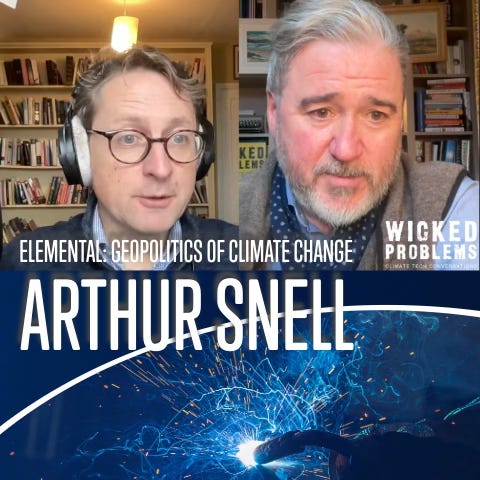
In this conversation:
00:00 Arctic Ice Wake Up
00:45 War Crowds Out Climate
02:32 Chokepoints Aren’t Fixed
04:08 Meet Arthur Snell
04:22 Why Climate Is Geopolitics
08:05 Alps Collapse Story
11:01 Skiing Lobbies And Emissions
12:40 Geopolitics Map Gets Redrawn
14:59 Arctic Shipping Routes Open
18:37 Trump Greenland And Minerals
22:46 Panama Canal China Leverage
24:20 Panama Canal Leverage
25:56 Who Shapes Strategy
28:24 Migration as Hard Reality
34:55 Greenland Plans Accelerate
39:27 Russia China North Shift
42:28 Wine and Adaptation
44:36 Book Plug and Farewell
And check out our previous conversation with one of Arthur’s sources, Gaia Vince:


